The short answer
Ski touring means walking uphill on your skis, with climbing skins on the bases and your heels free, then locking in and skiing down. A first tour is mostly about a handful of new skills: skinning, kick turns, switching between up and down, and using avalanche rescue kit. If you ski reds and blacks confidently and can walk for five to seven hours a day, you can learn it. The basics come quickly; the kick turn takes longest.
| Skiing level | Confident on red and black runs, with a little off-piste. |
|---|---|
| Fitness | Five to seven hours on your feet, most days. |
| Core kit | Touring skis and bindings, boots with a walk mode, skins, poles, transceiver, probe and shovel. |
| New skills | Skinning, kick turns, transitions and avalanche rescue. |
| Best first step | An introductory touring course, or a guided first tour. |
What ski touring is
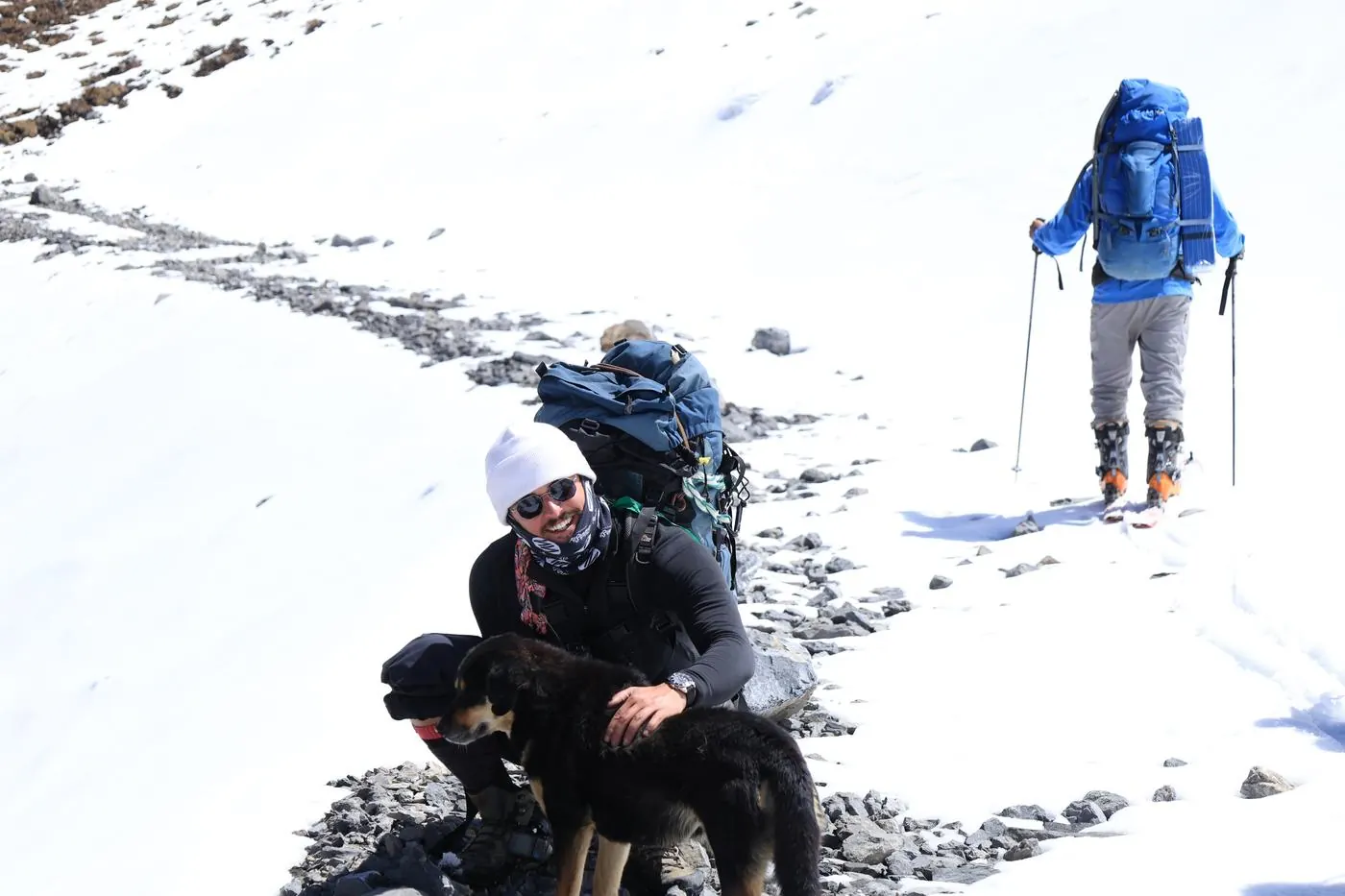
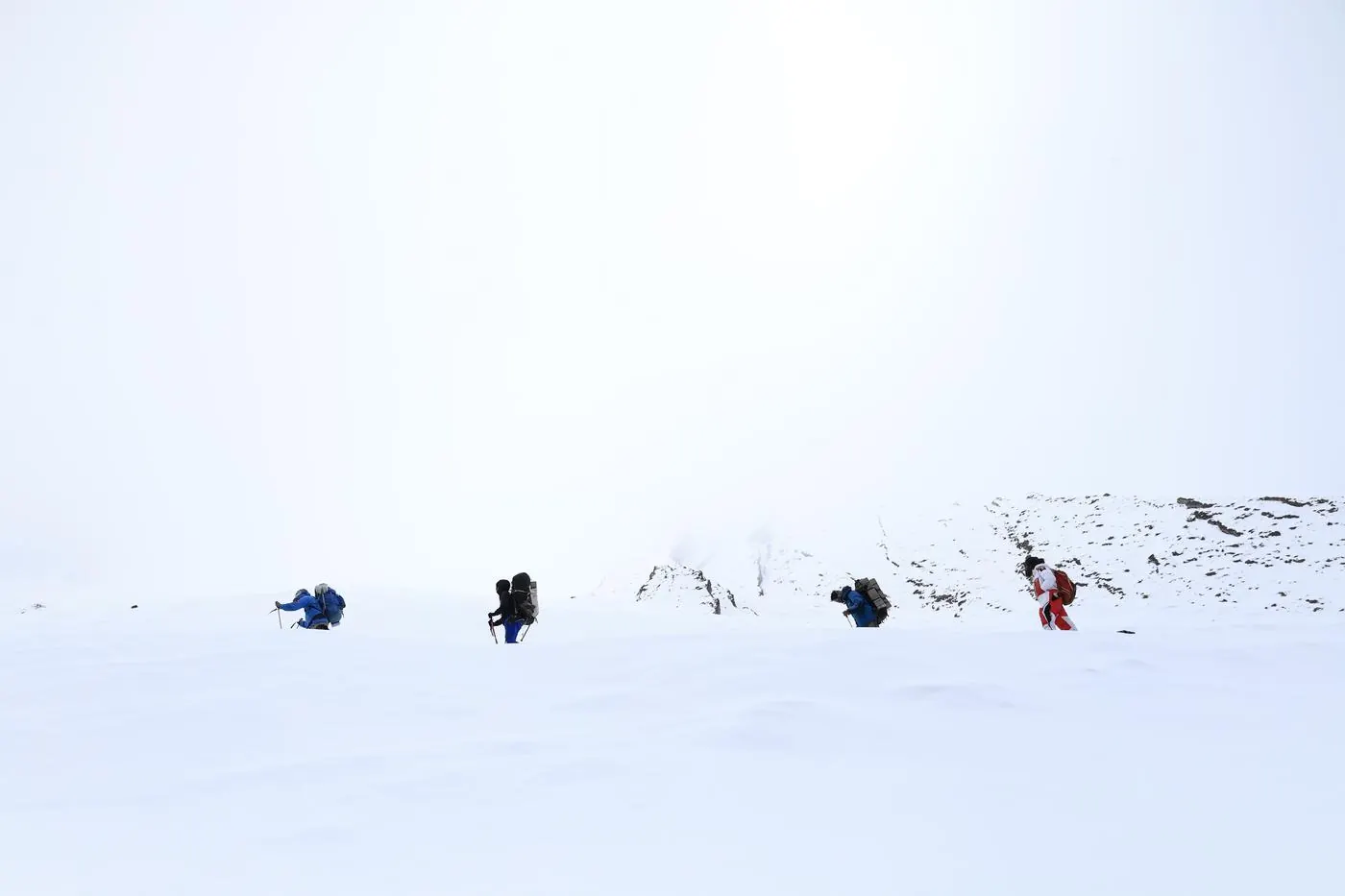
On a ski tour you go up as well as down. Touring bindings let your heel lift as you walk; climbing skins, strips of fabric stuck to the base of each ski, grip the snow so you don’t slide back. At the top you peel the skins off, lock your heels and boots, and ski down. It’s how you reach snow no lift goes near, and in Nepal, with no working resorts, it’s how almost all skiing happens.
A typical day
Days start early, when the snow is firm and most stable. You climb at a steady pace for one to three hours, with short stops to drink, eat and add or shed layers. At the top comes the transition: skins off, boots and bindings into ski mode. Then you ski down, often in short sections one at a time, as the guide directs. On a first tour there’s plenty of time built in for practice, and you’re usually back by early afternoon.
The skills you’ll learn
- Skinning: a gliding walk rather than a step, with heel risers for the steeper bits. Pace matters more than power.
- Kick turns: turning on the spot to zig-zag up a steep slope. Everyone finds this awkward at first; practise on gentle ground.
- Transitions: switching between climbing and skiing quickly, without dropping anything or getting cold.
- Avalanche rescue: using a transceiver, probe and shovel to find and dig out a buried partner. This is rescue kit, not safety kit: good decisions keep you out of trouble, and the kit is for when something goes wrong.
Kit
For a first tour, renting is fine. Not every shop stocks touring skis, so book ahead. Boots matter most: they need a walk mode and a good fit, because you’ll be in them all day. You’ll also need a 30–35 litre pack, layers you can take on and off, ski crampons for icy climbs, and your own transceiver, probe and shovel, or ones you’ve arranged in advance. See our kit list for Nepal.
How fit you need to be
Fitter than for a week on piste, but you don’t need to be an athlete. If you can walk hills for five to seven hours with a light pack, you’re in good shape. In the two months before, walk hills with a pack, do stairs or a stepper, cycle, and add some leg strength work. The better your base fitness, the more you’ll enjoy the skiing.
How to prepare
The best preparation is a day or two of touring before you go: an introductory course in the Alps, or a guided day from a resort. If you can, take an avalanche awareness course too. At home, practise kick turns on a gentle slope and get used to your boots. Then the first days of your trip become about the mountains, not the kit.
Touring at altitude
A first tour in the Himalaya is very doable, but altitude changes the pace. At 4,000m you have noticeably less oxygen, so you climb slower and rest more. A good itinerary climbs gradually and builds in time to adjust. More in our guide to altitude for skiers.
Mistakes first-timers make
- Going off too fast and burning out in the first hour.
- Climbing in too many layers. Start a little cold.
- Ignoring a hot spot until it’s a blister. Tape it early.
- Forgetting to eat and drink because you’re busy concentrating.
- Letting skins get wet or snowy at transitions, so they stop sticking.
Questions
Is ski touring hard?
The skiing is normal skiing; the new part is going uphill. It’s tiring rather than difficult, and the technique comes with a few days’ practice.
Can I do my first ski tour in the Himalaya?
Yes, on a trip built for it, with guides teaching you on the snow and time to acclimatise. Our Annapurna Sanctuary Ski Tour is designed for confident piste skiers who have never toured.
Do I need my own touring kit?
Not for a first tour. You can rent touring skis, bindings and boots, though you should book ahead. Avalanche kit must be your own or arranged in advance.
Can snowboarders go ski touring?
Yes, on a splitboard: a board that splits into two halves for climbing on skins, then locks back together for the ride down.
Do I need an avalanche course first?
It’s strongly recommended. On a guided trip the guides make the avalanche decisions, but you should know how to use a transceiver, probe and shovel to help find someone else.