Booking now for February 2027
Annapurna Ski Expedition The world’s highest luxury ski tour
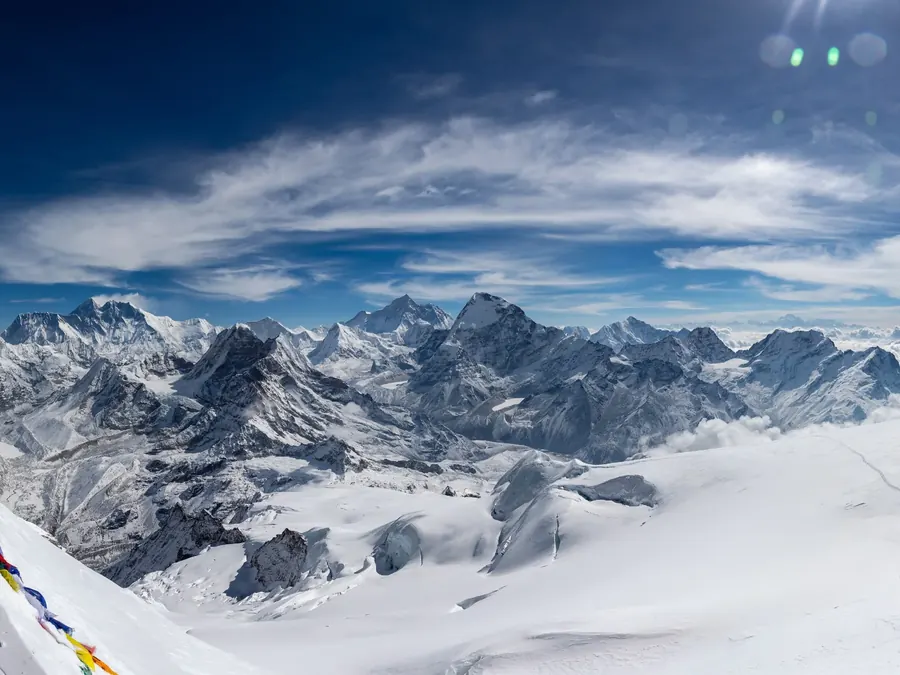
Ten days in the Annapurna range: five-star hotels, a heated private base camp at 4,565m and a helicopter flight out. No touring experience needed.
£13,500 per person · 17–26 Feb 2027 & 1–10 Feb 2028
Ten days, valley floor to 5,416m
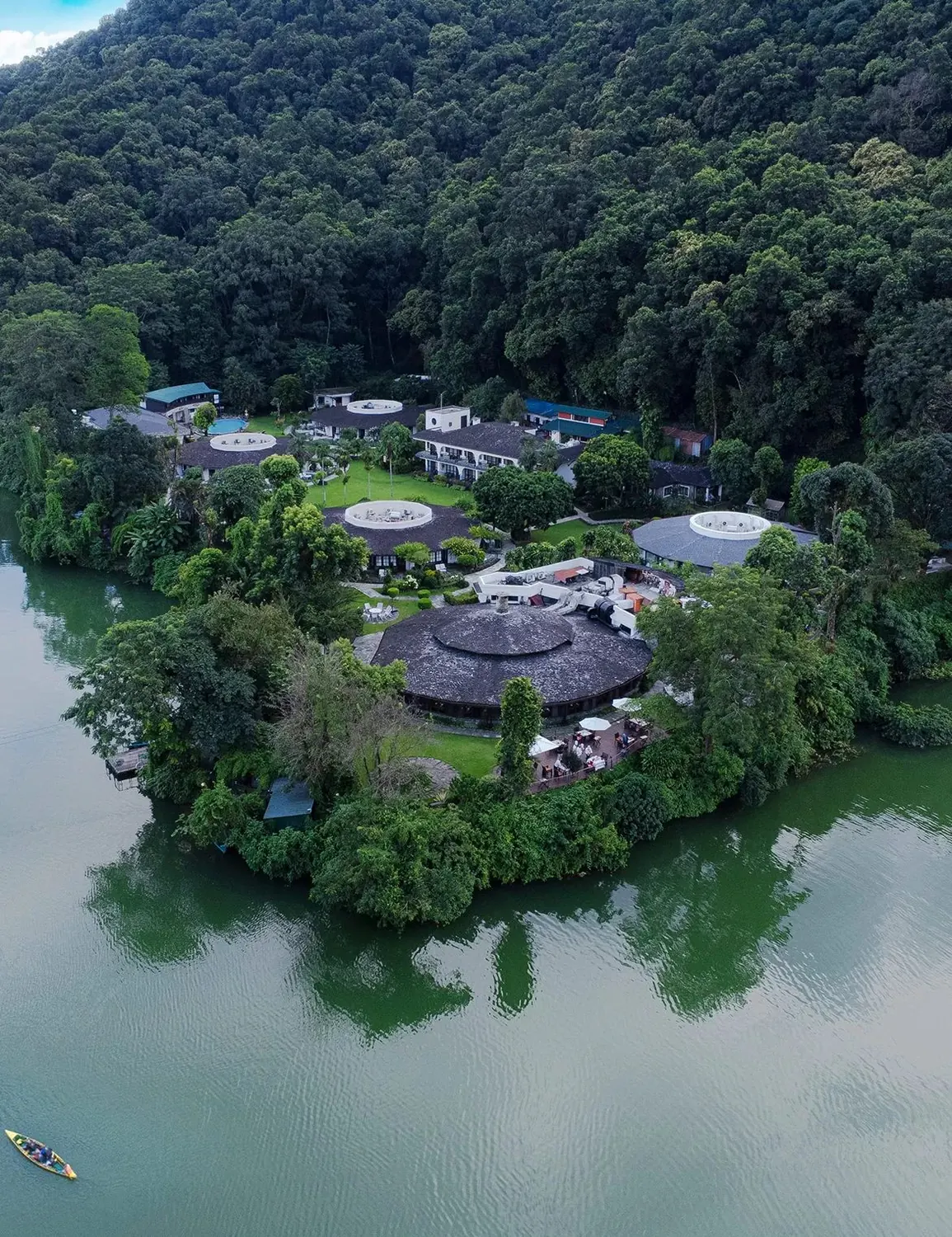
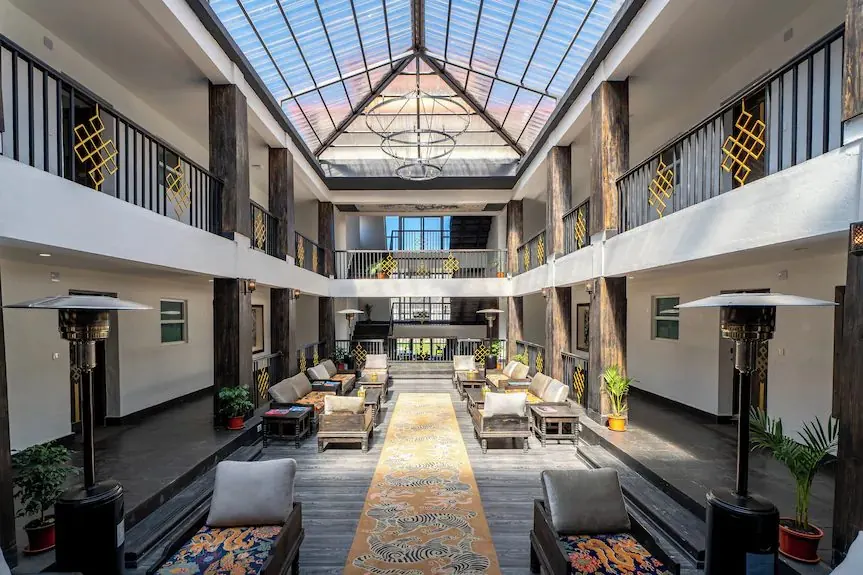
- Five-star lodges in Pokhara and Muktinath
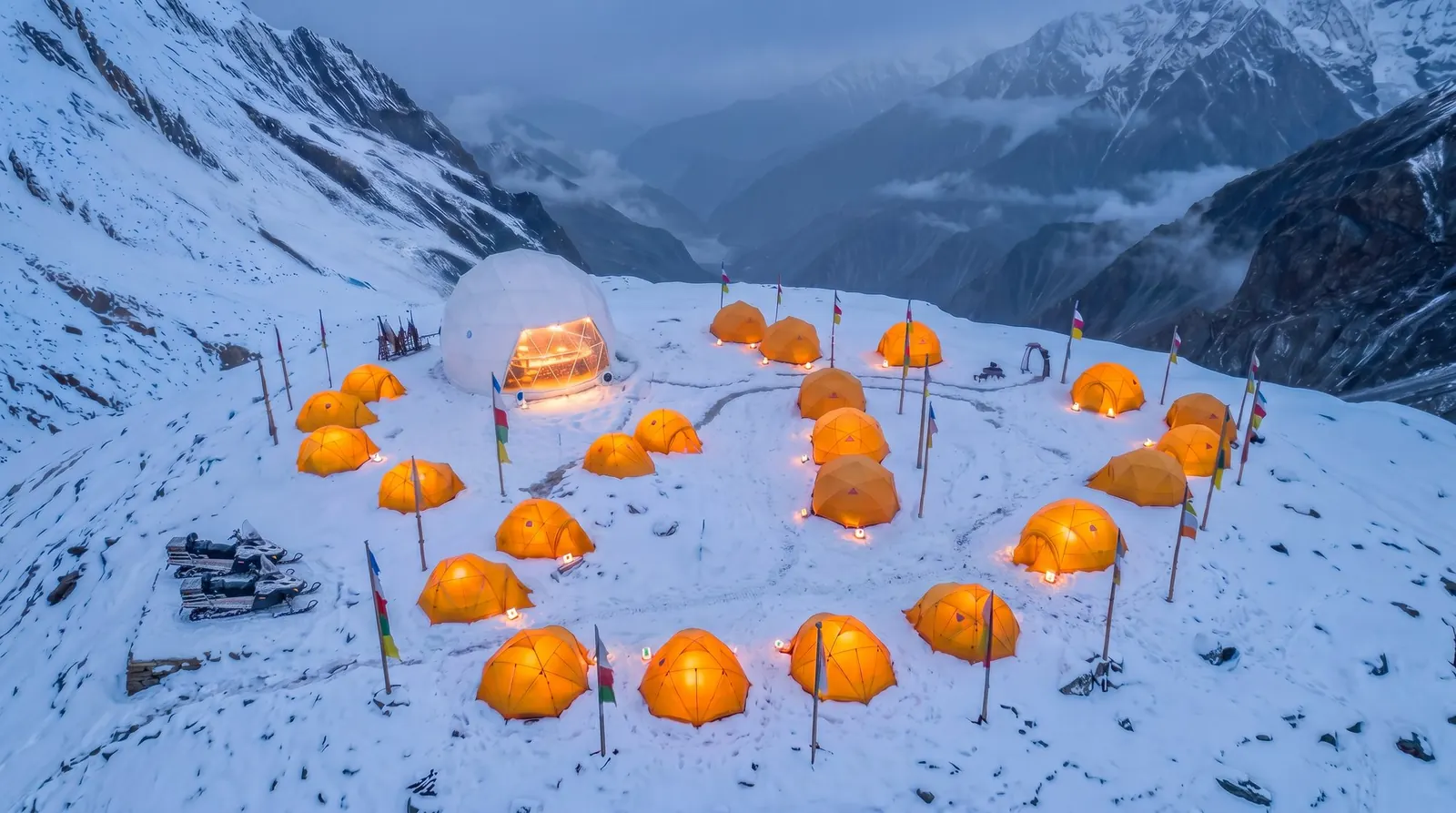
- A private heated base camp at 4,565m, with a grand dome and a bar
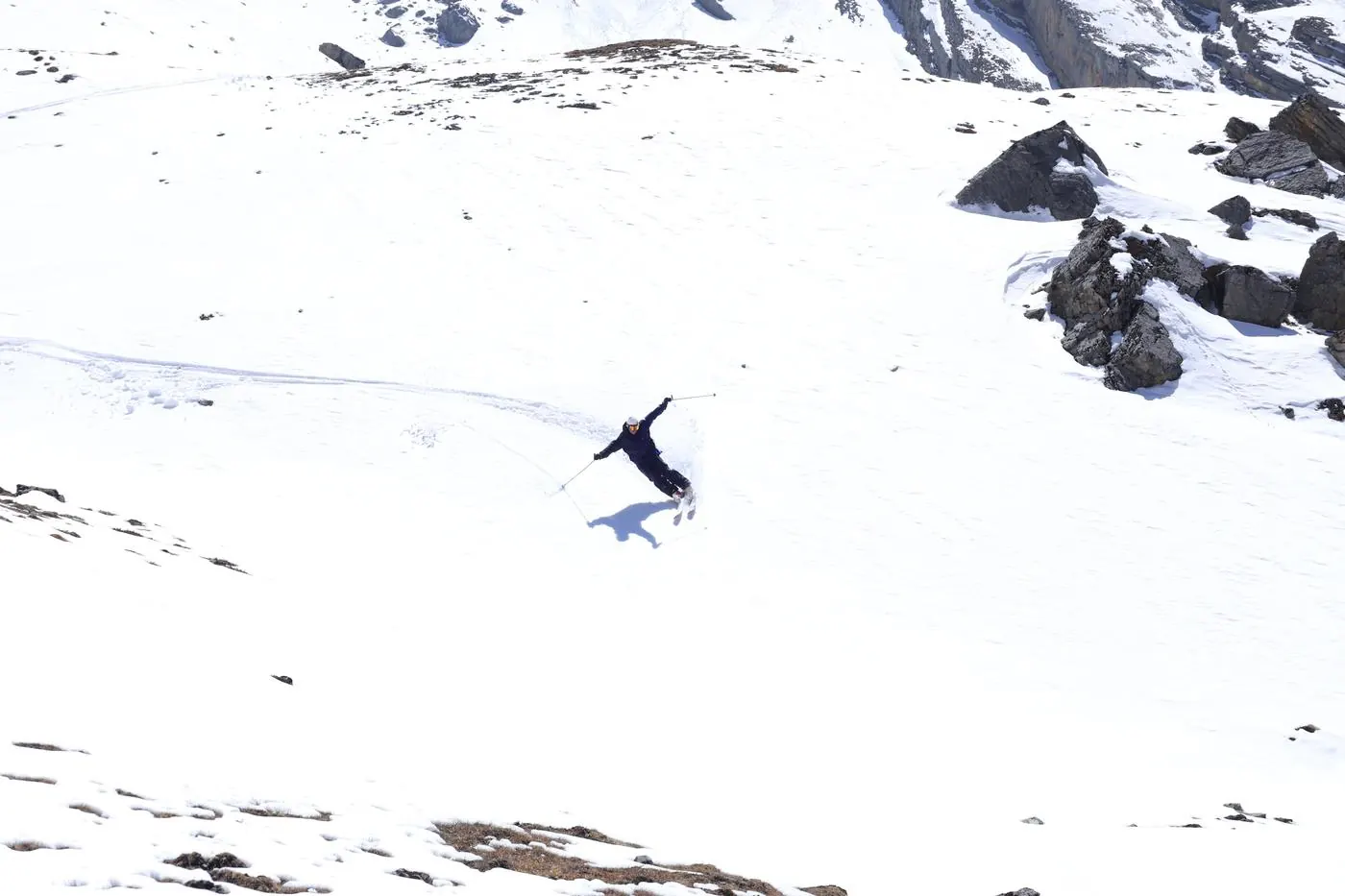
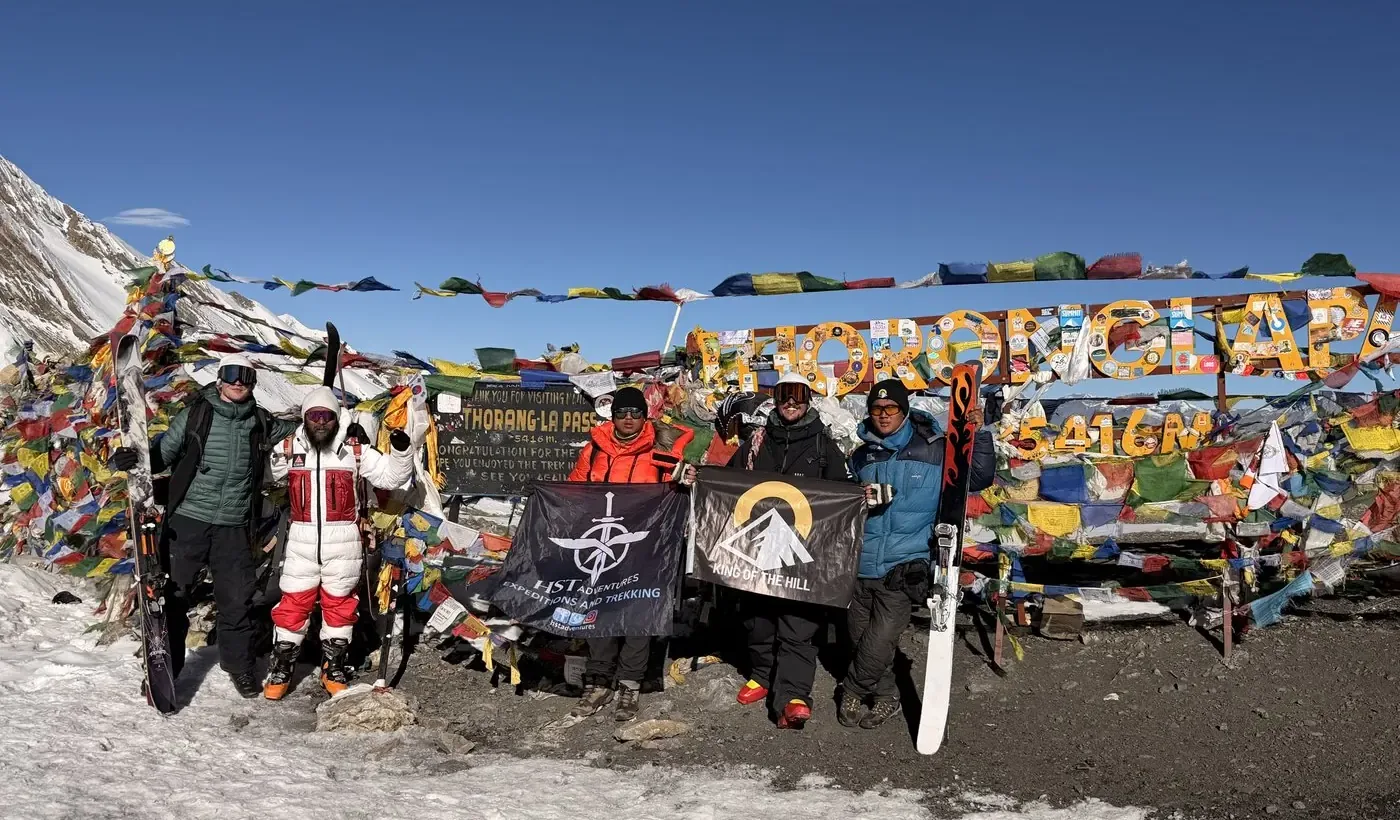
- Guided ski days above Muktinath, and the option to ski Thorong La (5,416m), never skied before
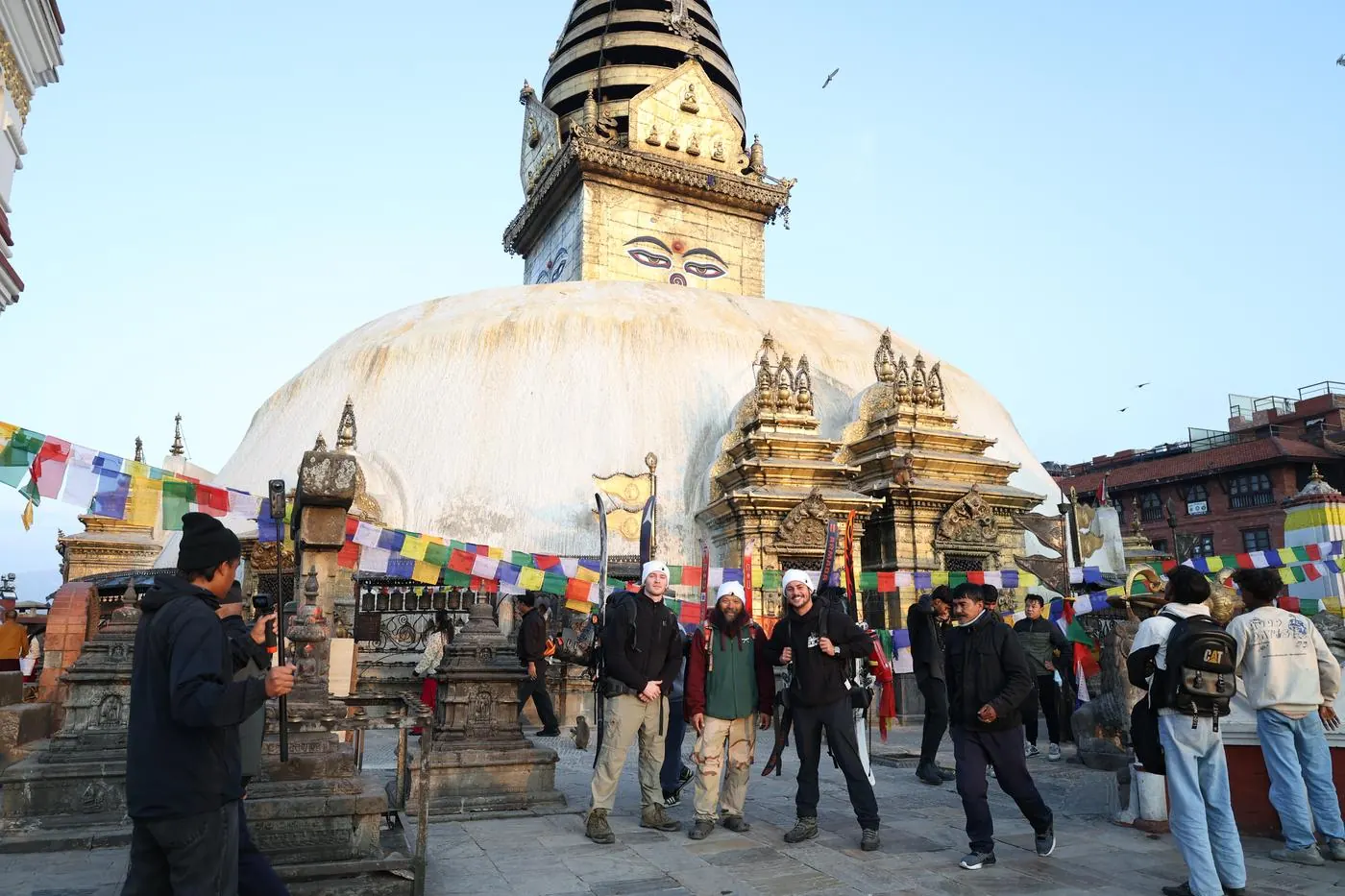
- A Tika welcome, Muktinath Temple at dawn and a visit to the village where HST’s guides grew up
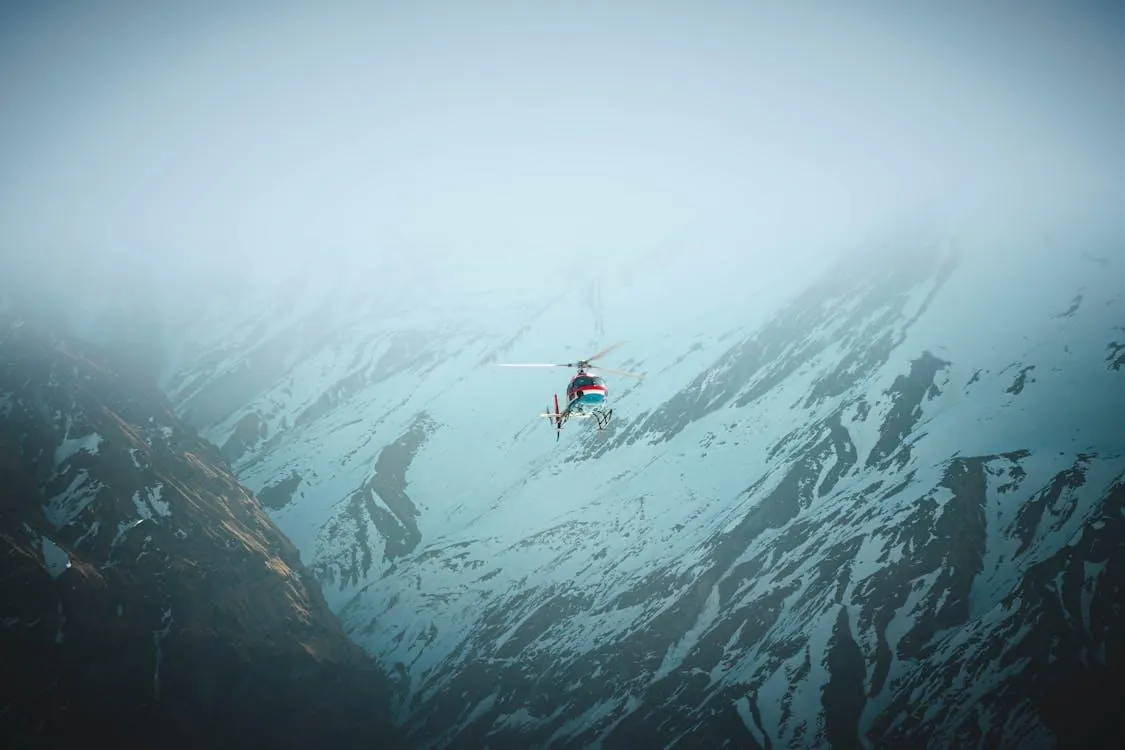
- A helicopter flight out from base camp to Pokhara
Built-in acclimatisation stops: Jomsom 2,720m · Muktinath 3,710m (two nights) · Base camp 4,565m. Thorong La is offered only to guests the guide and medical team assess as ready on the day, and only in safe conditions.
The King of the Hill touch
Is it for me?
- You’re comfortable on red and black runs and have skied off-piste
- You don’t need to have toured: the guides teach you on the mountain
- You’ll follow the 12-week prep guide that comes with every booking
- Solo is fine: every tent is single occupancy, with no single supplement
Not sure it’s the right trip? Take the 30-second trip finder.
Day by day
01Kathmandu ArrivalKathmandu · 1,400m · Arrival
Woodsmoke, incense, and the sound of everything happening at once. Your first evening is unhurried by design: a full kit check, a welcome ceremony, and a briefing dinner that gives you your first real sense of what the next ten days will ask of you.
| Arrival | Tribhuvan Airport — private 4x4 transfer |
|---|---|
| Day | Check-in · full kit inspection with guide team |
| Evening | Welcome drinks & Tika ceremony |
| Dinner | Briefing dinner at Nepali Chulo |
02The Road WestKathmandu → Pokhara · 900m
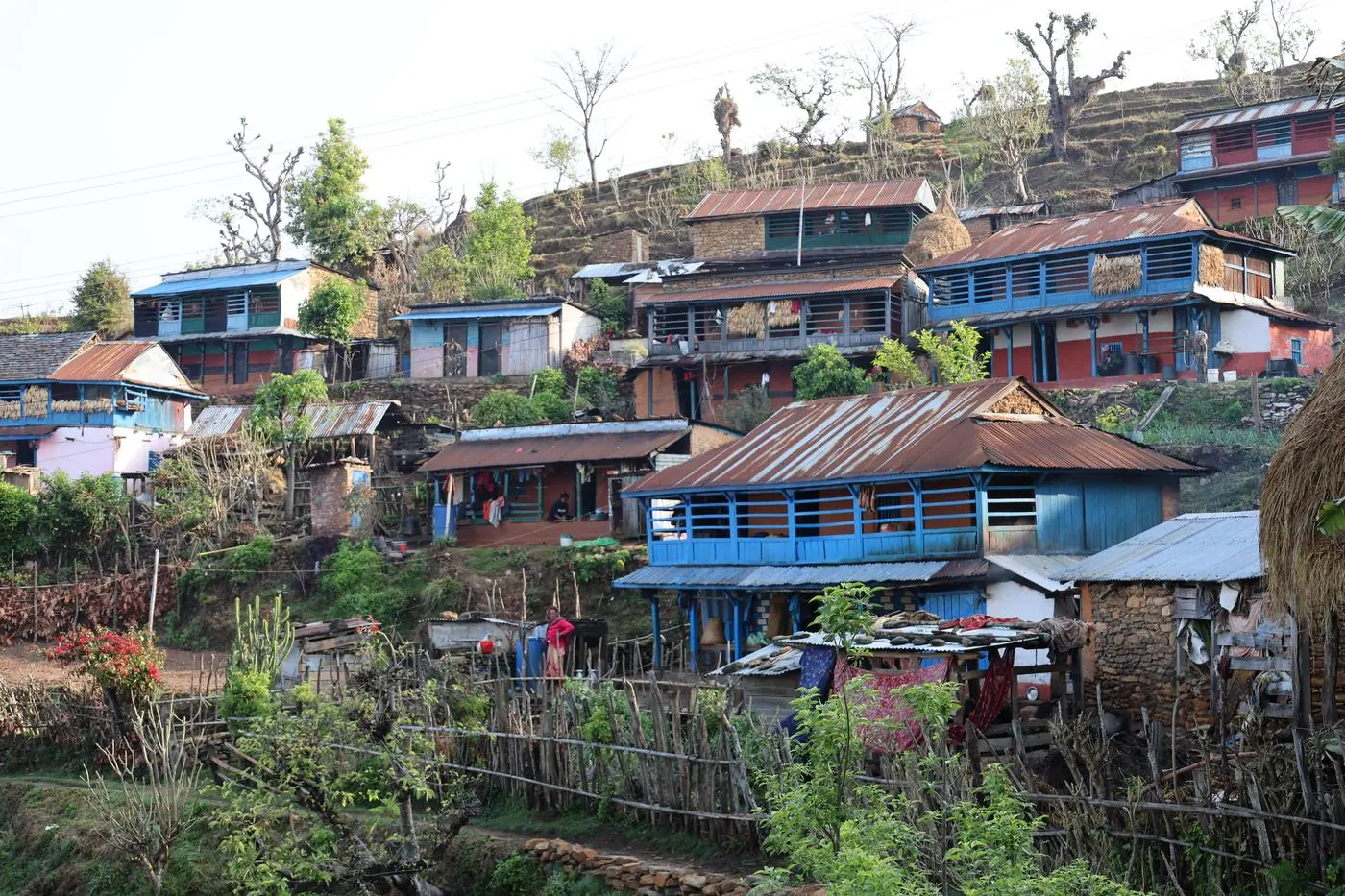
The long drive west trades the noise of Kathmandu for terraced hills, river crossings and roadside tea stops. The afternoon halt is not a scripted experience: it is the village where HST’s local guides grew up, and you arrive as their guests — not as tourists passing through.
| 7:00am | Breakfast at Aloft Hotel |
|---|---|
| 8:00am | Load the 4x4s & depart Kathmandu |
| 12:00pm | Lunch at Kuringa riverside resort |
| Afternoon | Local village — rice planting & temple visit |
| Evening | Long table dinner in the hills above the village |
03Edge of the KingdomPokhara → Jomsom · 2,720m
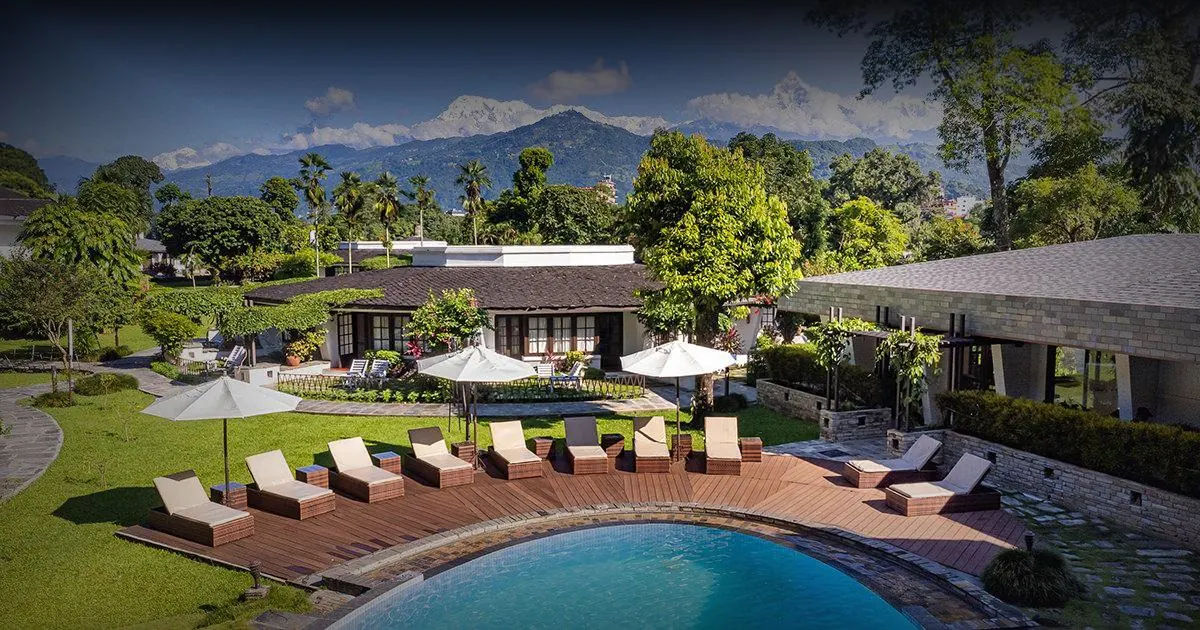
Jomsom sits at the threshold of the old Mustang kingdom — dry, dramatic and windswept. Tonight is the trip’s first deliberate acclimatisation stop: a planned pause that lets your body begin adjusting before altitude gains resume.
| Morning | Free — explore Pokhara lakeside at leisure |
|---|---|
| 12:00pm | Depart Pokhara for Jomsom — up the Kali Gandaki, the deepest river gorge on earth |
| Arrival | Explore Jomsom village |
| Overnight | Marpha Palace Hotel — first acclimatisation night |
04Sacred GroundSki dayJomsom → Muktinath · 3,710m
Muktinath is one of the most sacred pilgrimage sites in Hindu and Buddhist tradition — eternal flames from natural gas vents, 108 stone waterspouts carrying glacial water. A place of profound stillness before the mountains begin in earnest.
| Morning | Drive to Muktinath — Lo Mustang Resort (5-star), two nights |
|---|---|
| Afternoon | First skiing & mountain exploration |
| Temple | Muktinath Temple — arrive before dawn, in near-silence |
05Free Range MountainSki dayMuktinath · 3,710m · Night Two
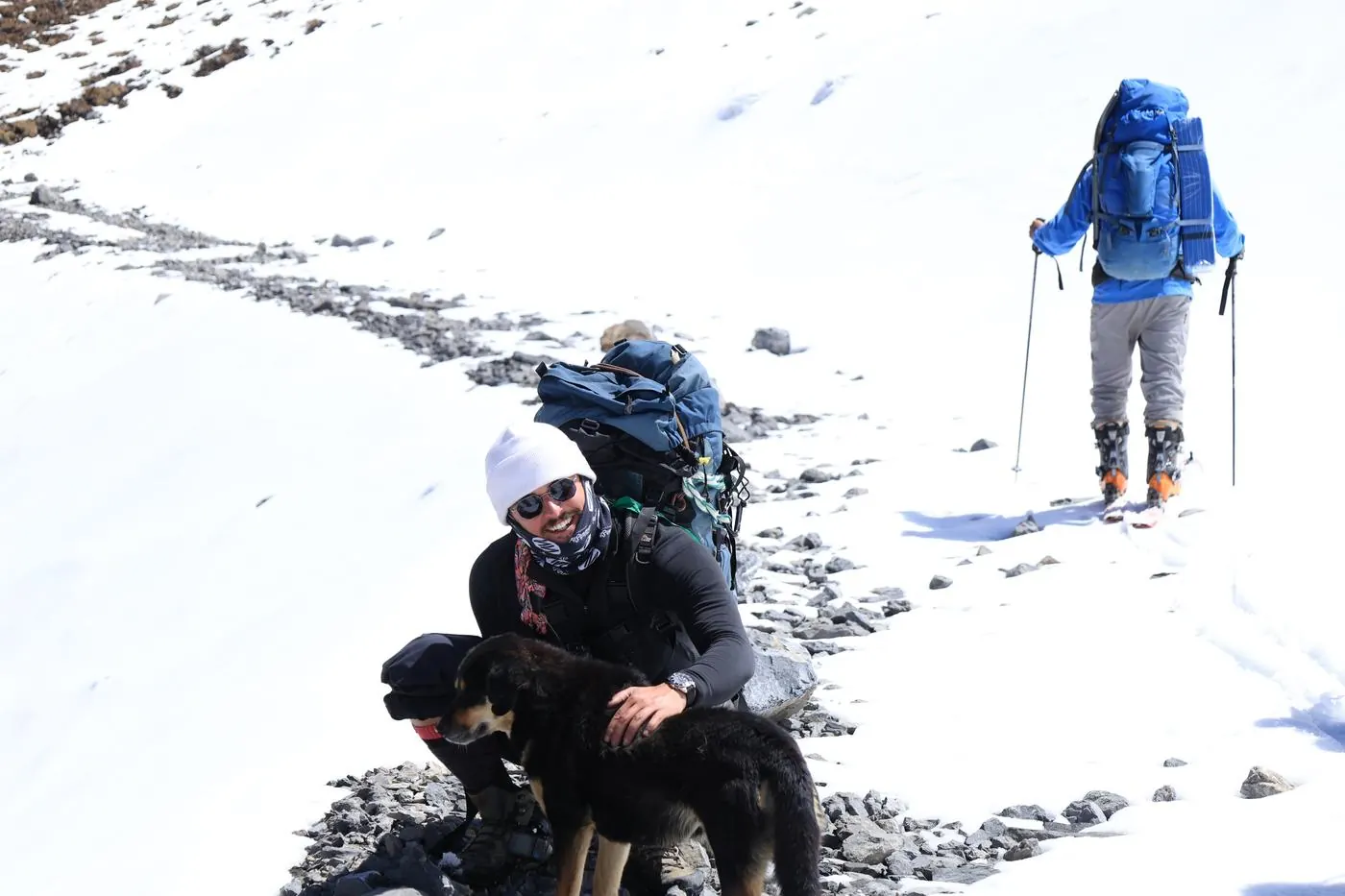
From today, mornings begin with a daily acclimatisation assessment. Skiing is concentrated in the morning, when the snowpack is at its most stable — avalanche risk rises as the day warms — and always runs to conditions assessed by the guides. A full day of free-range mountain exploration follows, with the option of a candlelit dinner in the evening.
| 6:30am | Acclimatisation assessment · yoga / breathwork |
|---|---|
| 8:00am+ | Full day free-range mountain exploration & skiing |
| 6:00pm | Dinner — resort or candlelit dinner |
06Ascent to Base CampSki dayAscent to Base Camp · 4,565m
Base camp sits at 4,565 metres. Thirty private heated tents, a grand dome and a bar: nothing like it has ever existed at this altitude in organised ski travel.
| 6:30am | Acclimatisation assessment · yoga / breathwork |
|---|---|
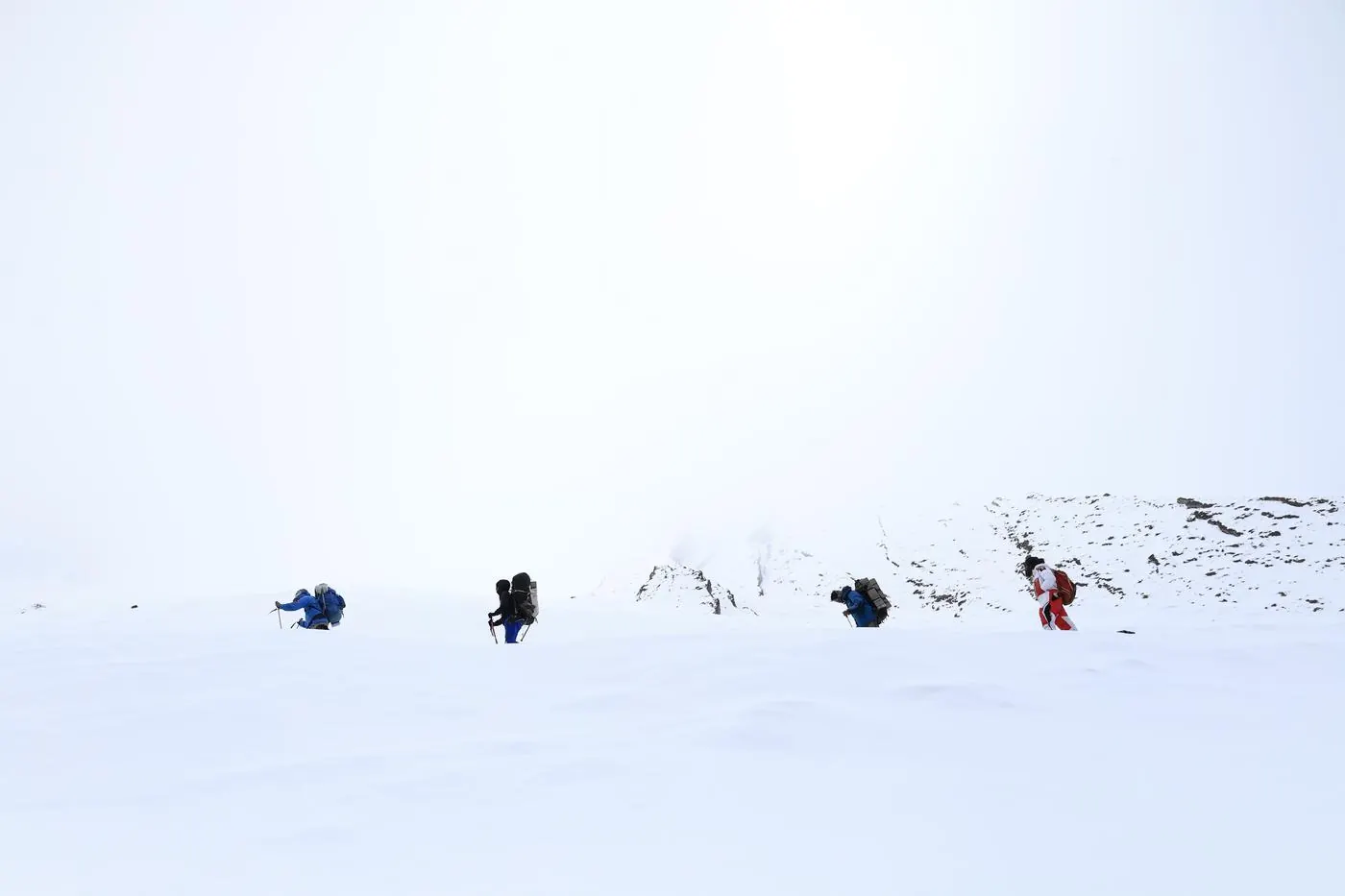
| 8:00am | Ascent on foot or by horseback |
| 12:00pm+ | First guided ski descents from 4,500m |
| 6:00pm | Dinner in the grand dome · guided talks |
| 7:30pm | Evening entertainment |
07Tour Site Phase ISki dayBase Camp · 4,565m
A full day of guided skiing at 4,500 metres, ungroomed and unlifted. Evenings are built to match the days: dinner in the grand dome, guided talks, then evening entertainment under a genuinely dark sky.
| 6:30am | Acclimatisation assessment · yoga / breathwork |
|---|---|
| 8:00am+ | Full day guided skiing |
| 6:00pm | Dinner in the grand dome · guided talks |
| 7:30pm | Evening entertainment |
08Tour Site Phase IISki dayBase Camp → Thorong La (Optional) · 4,565–5,416m
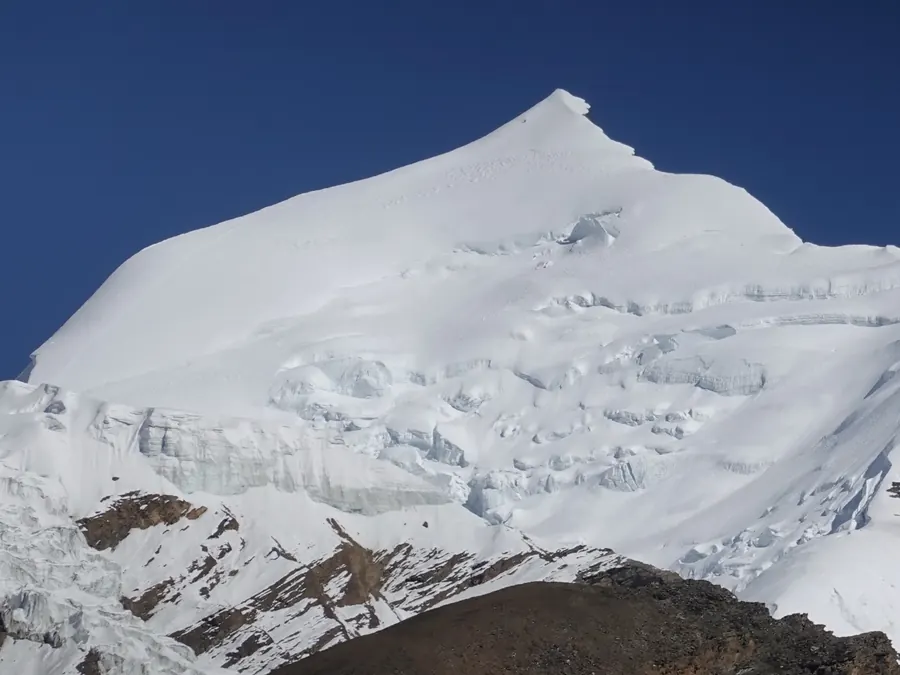
5,416 metres is the expedition’s high point — entirely optional, attempted only by those acclimatised and well, in safe conditions, and only when the guides judge it safe to go. The HST guide team leads the group to Thorong La, the high crossing of the Annapurna Circuit, never before skied.
| 6:30am | Acclimatisation assessment · yoga / breathwork |
|---|---|
| 8:00am+ | Guided skiing + optional: Thorong La Pass, 5,416m |
| 6:00pm | Dinner in the grand dome · guided talks |
| 7:30pm | Evening entertainment |
09Tour Site Final DaySki dayBase Camp · 4,565–5,416m
A last chance at Thorong La for anyone who hasn’t yet made the crossing, followed by a farewell ceremony back at camp — personalised keepsakes and a final dinner in the grand dome.
| 8:00am+ | Final ski sessions + optional: Thorong La Pass |
|---|---|
| 6:00pm | Farewell ceremony · personalised keepsakes |
| 7:30pm | Final evening — Evening entertainment |
10Heli Transfer DepartureSki dayBase Camp → Pokhara · 4,565m → 900m
The descent by air: four guests at a time, lifting off with the full Annapurna massif behind you. 4,500 metres to 900 metres in twenty minutes — the fastest altitude change of the trip, under direct medical guidance.
| 4:00am | Early sunrise ski — first light on the Annapurna massif |
|---|---|
| 4:00–10:00am | Final ski sessions in the quiet of the early mountain |
| Morning | Helicopter departures from 4,500m — four guests at a time, ~20 min |
| Arrival | Pokhara — onward transfers arranged |
All skiing depends on weather and snow. The guides decide each day.
The route in 3D
The whole expedition, rendered from satellite terrain of the Thorong La region — from Muktinath at the valley’s edge to the 5,416m high point and the descent back down. Rotate it, and tap each waypoint to see what that stage of the journey holds.
Who’s looking after you
On the mountain
HST Adventures
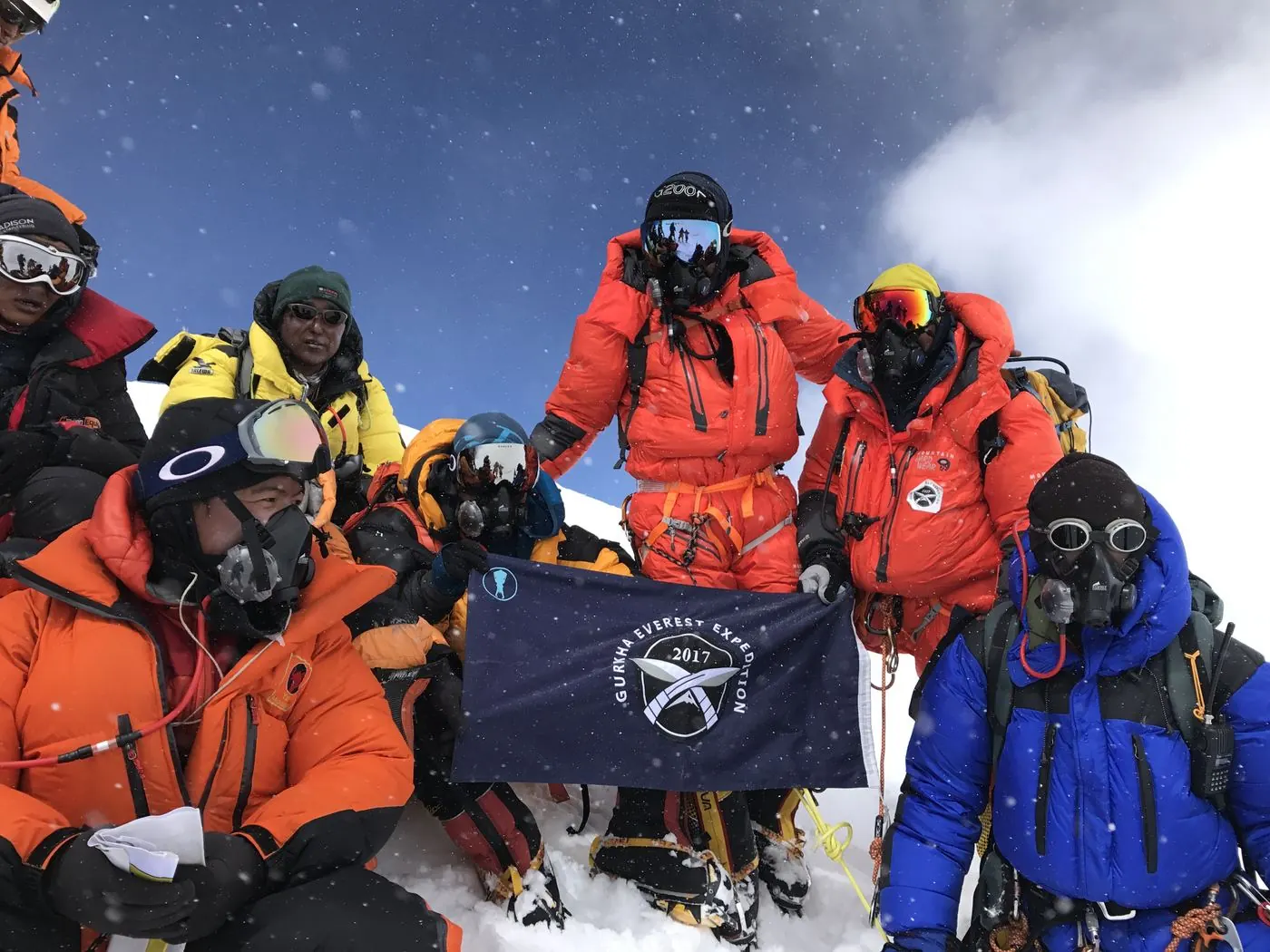
Every King of the Hill expedition is delivered on the ground by HST Adventures — a veteran-led operator founded in 2011, registered in Nepal as Himalayan Ski Trek Pvt. Ltd. We chose them not as a logistics provider but as the only team with the experience, judgement, and local credibility to operate properly in one of the most demanding mountain environments on earth.
HST’s team was behind Hari Budha Magar’s 2023 Everest summit — the first double above-the-knee amputee to reach the top of the world — and has been credited with supporting the first double above-knee amputee summit of Mont Blanc. From Everest expeditions to adaptive climbing, ski mountaineering and record-breaking endurance expeditions: experience delivering world-class trips with no major incidents recorded.
- Guide & Porter RatioLed by an IFMGA-certified guide from HST · 1 guide per 5 guests · 1 porter per guest — so you’re never carrying all your own kit up the mountain · plus a full chef and medical crew
- LicencesNTB Trekking Agency Licence · TAAN member · ACAP, TIMS, Restricted Area Permit for upper Mustang
- Safety SystemsRoute assessment each morning · Conservative acclimatisation pacing · Pre-established helicopter evacuation · Ongoing weather, snowpack and terrain assessment
- PhilosophyNot to remove the reality of the mountain environment — but to manage it professionally through preparation, local expertise, and disciplined decision-making.
Your medical lead
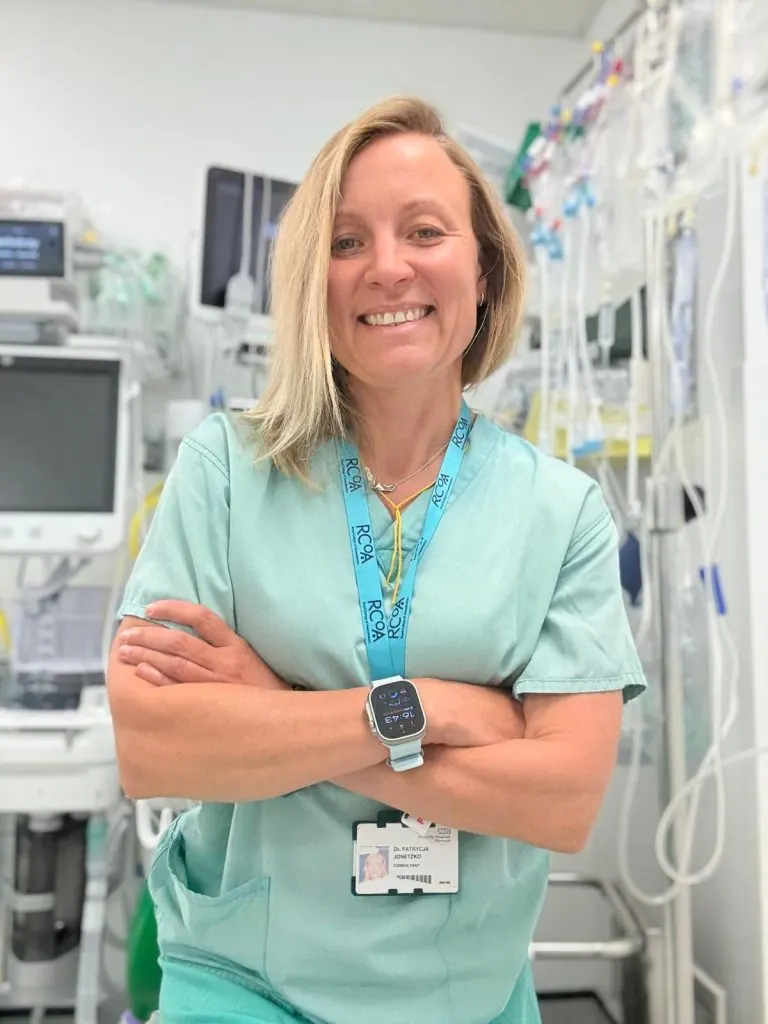
Dr Patrycja Jonetzko
Consultant Anaesthetist, The Altitude Centre, London
Dr Patrycja Jonetzko leads the medical and safety framework for this expedition, and is your primary point of contact for all things altitude — from the moment you book to the moment you’re home. She brings experience from high-performance productions, including Red Bull, alongside her own high-altitude medicine practice at the Altitude Centre in London.
She is fully hosted on the expedition as your dedicated Medical Lead — not a volunteer or junior arrangement — and holds full professional indemnity cover through the Medical Protection Society (MPS) for the duration of the trip.
- RoleMedical Lead, King of the Hill — Nepal 2027
- Availability24/7 throughout the expedition, with clinical handover in Nepal or the UK
- Pre-departure consultationComplimentary 1:1 “Health at Altitude” assessment for every client (ordinarily £200)
- Medical team & standingReviews and briefs every other expedition doctor before departure; holds full professional indemnity cover (MPS)
Your hosts
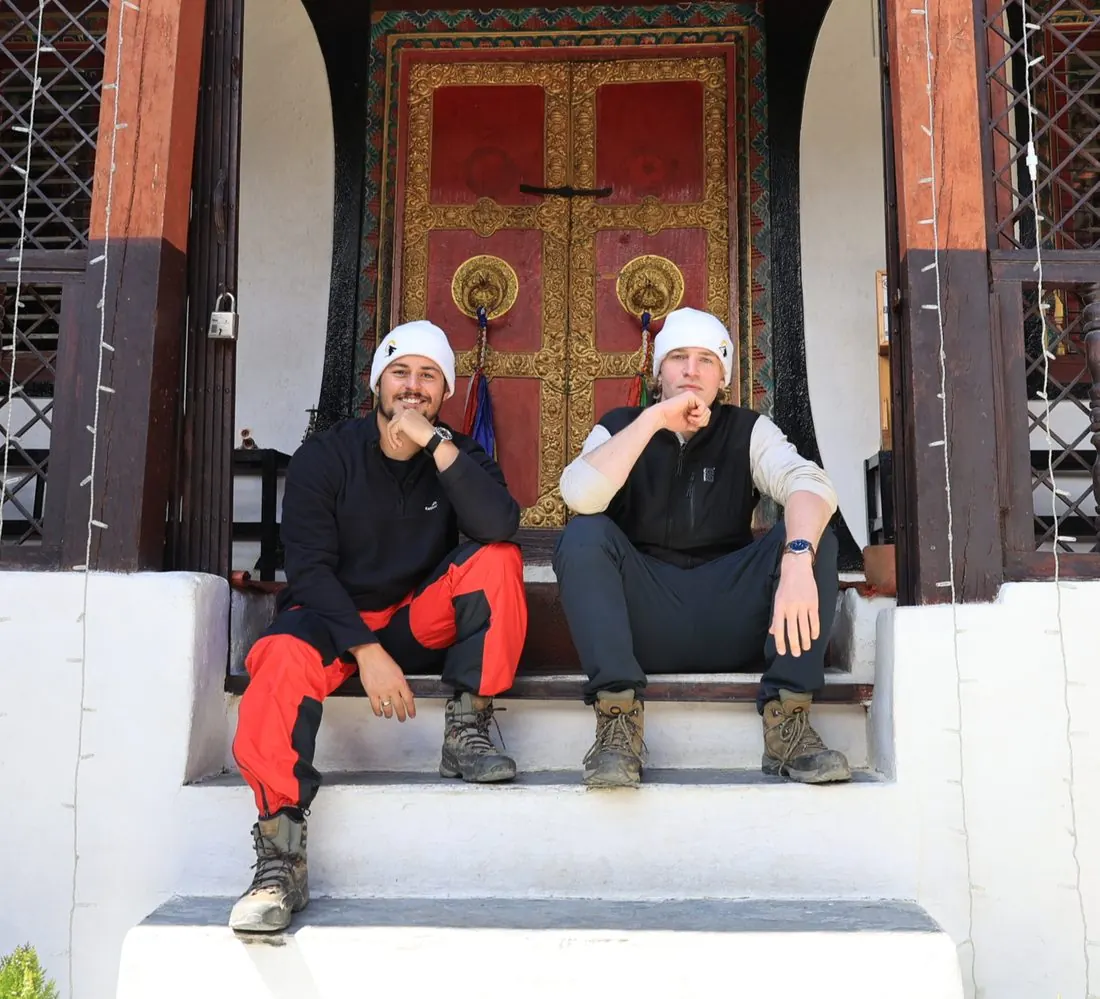
Reuben Gray & Matt Brinkley
King of the Hill was founded by Reuben Gray and Matt Brinkley around a single conviction: that the terrain above Muktinath and Thorong La is world-class ski country that has never been opened up properly. Confirming it took a full recon expedition, deep partnerships with the region’s most experienced ground operator, and more than a year of planning — permits, logistics, medical framework and safety systems built from the ground up.
Reuben and Matt host every expedition personally — running the guest experience, the logistics and the evenings end to end. All mountain guiding, avalanche assessment and on-mountain safety decisions sit with HST’s professional team, who have operated in this environment for over a decade. Two founders who care about every detail, backed by the people best placed to deliver it.
Featured on Snow-ForecastPartnered with Oxford Ski Club
Safety at altitude
Guides have the final word. A staged climb to altitude, a doctor on the team and a snowpack check every morning.
This is the first ski tour ever run in this part of the Annapurna region with a group of this size, and we treat it accordingly. Safety is not one consideration among many — it is the condition on which everything else depends. From the moment you arrive, the guides’ word is final. When they say go, we go; when they say stop, wait or turn back, we do so without debate. That single discipline — everyone listening to their guides, without exception — is what makes an undertaking like this possible at all.
Every decision that carries risk — where we ski, when we move, whether the high crossing goes ahead — is made by people who have operated in this terrain for over a decade, backed by a dedicated medical team monitoring the whole group every day. We would rather stand a guest down for a day than let ambition override judgement. Nobody is ever pushed beyond what the guides and doctors assess as safe on the day.
All skiing is weather and conditions dependent. Most skiing is done in the morning, when the snowpack is at its most stable — avalanche risk rises through the day as the snow heats on the mountain. The HST guide team assesses snowpack, terrain and weather daily, and has the final decision on where, when and whether skiing takes place. Where conditions are not safe, plans are adapted or paused. No descent, session or high-point attempt goes ahead without the guides’ sign-off.
Staged ascent: Kathmandu, Pokhara, Jomsom (2,720m), Muktinath (3,710m, two nights) — four days before base camp.
Three trained doctors are on site at all times, dedicated to recognising and managing altitude sickness. The whole group is monitored daily — symptoms are caught early, and any guest showing signs is treated or stood down before it becomes serious. The medical team and guides make the call together.
Pulse oximeters, altitude medication and a full medical kit on site. Pre-established emergency evacuation protocols with Pokhara helicopter rescue, briefed and rehearsed before anyone goes high.
Transceiver, probe and shovel mandatory. Full kit briefing Day 1. Routes assessed by HST guide team each morning based on conditions.
Comfortable on red and black runs is the benchmark. No touring experience required — the guides teach you on the mountain. 12-week prep guide with every booking.
NTB Trekking Agency Licence, TAAN member. All permits included: ACAP, TIMS, and Restricted Area Permit for upper Mustang.
Kit list
Bring your own skis, boots and avalanche kit. The full list, and how to borrow what you don’t have.
This expedition operates at extreme altitude in temperatures that regularly reach −20°C to −25°C. Your personal equipment is your responsibility and must be brought with you. Everything below is what you need to be safe, warm and able to ski for ten days on the mountain.
You must bring your own skis (or splitboard) and your own ski boots. There are no ski shops anywhere in Nepal — nothing can be bought, hired or replaced once you arrive. Travel with your ski and boot bag as checked luggage and do not leave it to chance. If you do not own suitable equipment, contact us before you book (see below).
Ski touring skis with touring bindings and climbing skins, or a splitboard with skins. Bring your own — no exceptions. Skiers: bring your own boots. Snowboarders: bring your own boots.
Avalanche transceiver (beacon), probe and shovel — all mandatory. An ABS / airbag backpack is required. These must be your own or arranged in advance.
Ski jacket and salopettes / bib rated for −20°C to −25°C. Waterproof, windproof and genuinely insulated for extreme cold and high altitude.
Insulated mid layers — down or synthetic jacket, fleece or softshell. Layering is how you manage temperature swings between skinning and standing still.
Merino or technical thermal base layers, top and bottom. Bring several sets. Cotton has no place at this altitude.
A good pair of insulated ski gloves or mittens, plus liner (under) gloves. Spares strongly recommended — cold hands end days early.
Ski helmet, ski goggles (with a low-light lens option), and category 4 glacier sunglasses for the intense high-altitude glare.
Technical ski socks (several pairs) and warm camp / down booties for evenings at base camp. Keep a dry set in reserve.
Warm hat and neck gaiter / buff, sun cream and lip balm (high SPF), and a personal water bottle or flask. Any personal medication for the full trip.
Don’t have everything? We can help. For guests who don’t already own suitable equipment, we can arrange kit — including ski touring setups and avalanche safety gear — for an additional charge, organised in advance of departure. Skis and ski boots, however, are best brought from home wherever possible. Get in touch at info@kingofthehill.co.uk and we’ll sort it before you fly.
What’s included
Included
- All hotels and base camp accommodation
- All food and drink throughout
- All internal transfers, including the private 4x4s and the helicopter exit
- All permits: ACAP, TIMS and the Restricted Area Permit for upper Mustang
- The full HST guide team, led by an IFMGA-certified guide, with 1 guide per 5 guests and 1 porter per guest
- The medical team, with three doctors on site
- A free 1:1 “Health at Altitude” assessment before you go
- A 12-week prep guide
- Reuben and Matt hosting the whole trip
Not included
- International flights to Kathmandu
- Your skis (or splitboard) and boots
- Your avalanche kit: transceiver, probe, shovel and airbag pack
- Travel insurance (mandatory: must cover high-altitude trekking in Nepal, emergency medical treatment and helicopter evacuation)
Dates and prices
Reserve your place
£6,750 deposit 50% today. For February 2027, the £6,750 balance is due by 17 January 2027. Pay the £6,750 depositBring a friendBook together and you both get 5% off.
Spread the costPay the deposit, then monthly. Every payment is held in trust. Ask us on a call.
Insurance is mandatory. Every guest needs cover for high-altitude trekking in Nepal, emergency medical treatment and helicopter evacuation. We’ll ask for proof before departure.
Questions
What skiing level do I need?
You should be comfortable on red and black runs and have skied off-piste before. You do not need to have ski-toured before — touring is straightforward to pick up, the terrain here is forgiving for first-timers, and the guides will get you up to speed. What matters is that you arrive a confident off-piste skier and willing to learn.
Do I need to have ski-toured before?
No. Plenty of guests come to this without touring experience. It is an easy skill to learn and the terrain is well suited to learning it.
Who else is on the trip — what’s the age range?
Guests typically range from late twenties to mid-fifties. It is a group of capable, like-minded people rather than a narrow age bracket.
I’m travelling solo — is that a problem?
Not at all — solo travellers are very welcome. Every tent is single-occupancy, so you have your own private space with no sharing and no single supplement. Tents have double beds, so couples who want to share a tent can do so.
What happens if I get altitude sickness?
We monitor the whole group daily and three trained doctors are on site at all times specifically for altitude illness. If the medical team and guides decide you need to descend or be evacuated, that decision is final and there is nothing we can do to keep you on the mountain — it is a genuine risk of high-altitude travel that you accept by joining. That said, if you complete the preparation programme beforehand, or have been to altitude before, you should be well placed to cope. This is exactly why comprehensive high-altitude and evacuation insurance is mandatory (see below).
Is insurance required?
Yes — it is mandatory. You must hold travel insurance that explicitly covers high-altitude trekking in Nepal, emergency medical treatment, and helicopter evacuation, on top of standard travel cover. We will ask for proof before departure and cannot take you on the expedition without it.
Are flights included?
No. International flights are not included from anywhere in the world to Kathmandu. Everything from your arrival in Kathmandu onwards — hotels, base camp, all food and drink, internal transfers, permits, guides and the medical team — is covered.
What if the weather disrupts the trip?
Weather disruption is not something to worry about, but big storms can occur in winter in the Muktinath valley, and we plan for them. We do everything in our power to keep the itinerary on track. If the helicopters on the final day are delayed or grounded, we have vehicles ready to drive you to Pokhara or all the way to Kathmandu. For this reason we recommend booking your onward international flight for the day after the helicopter exit, not the same evening, so you always have enough time to get out.
How does the deposit work?
Reserve your place with a 50% deposit of £6,750. For February 2027, the £6,750 balance is due by 17 January 2027. Your deposit is refundable in full within 14 days of payment. Full details are in our booking terms.
Can I pay in instalments?
Yes. Pay the deposit, then spread the balance in monthly payments. Every payment is held in trust with Protected Trust Services until your trip has run. Book a call and we’ll set up a plan that suits you.
Is there a discount if I book with a friend?
Yes. Book together and you both get 5% off. It can’t be combined with other offers.
Got another question? Send it to us or book a free call.
Our partners
 Ground operator in Nepal