The short answer
The rule that matters: once above 3,000m, don’t raise your sleeping altitude by more than 500m a day, and take a rest day every three or four days. Most skiing in Nepal happens above 4,000m, so a good ski trip is built around acclimatisation, not the other way round. This is general guidance, not medical advice: see a travel clinic before you go.
| Altitude illness starts | Usually above 2,500m |
|---|---|
| Above 3,000m | Sleeping altitude up no more than 500m a day |
| Rest days | One every 3 to 4 days, or for every 1,000m gained |
| Biggest risk factors | Going up too fast, overexertion, previous altitude illness |
| If symptoms worsen | Go down |
Why skiers need to think about it
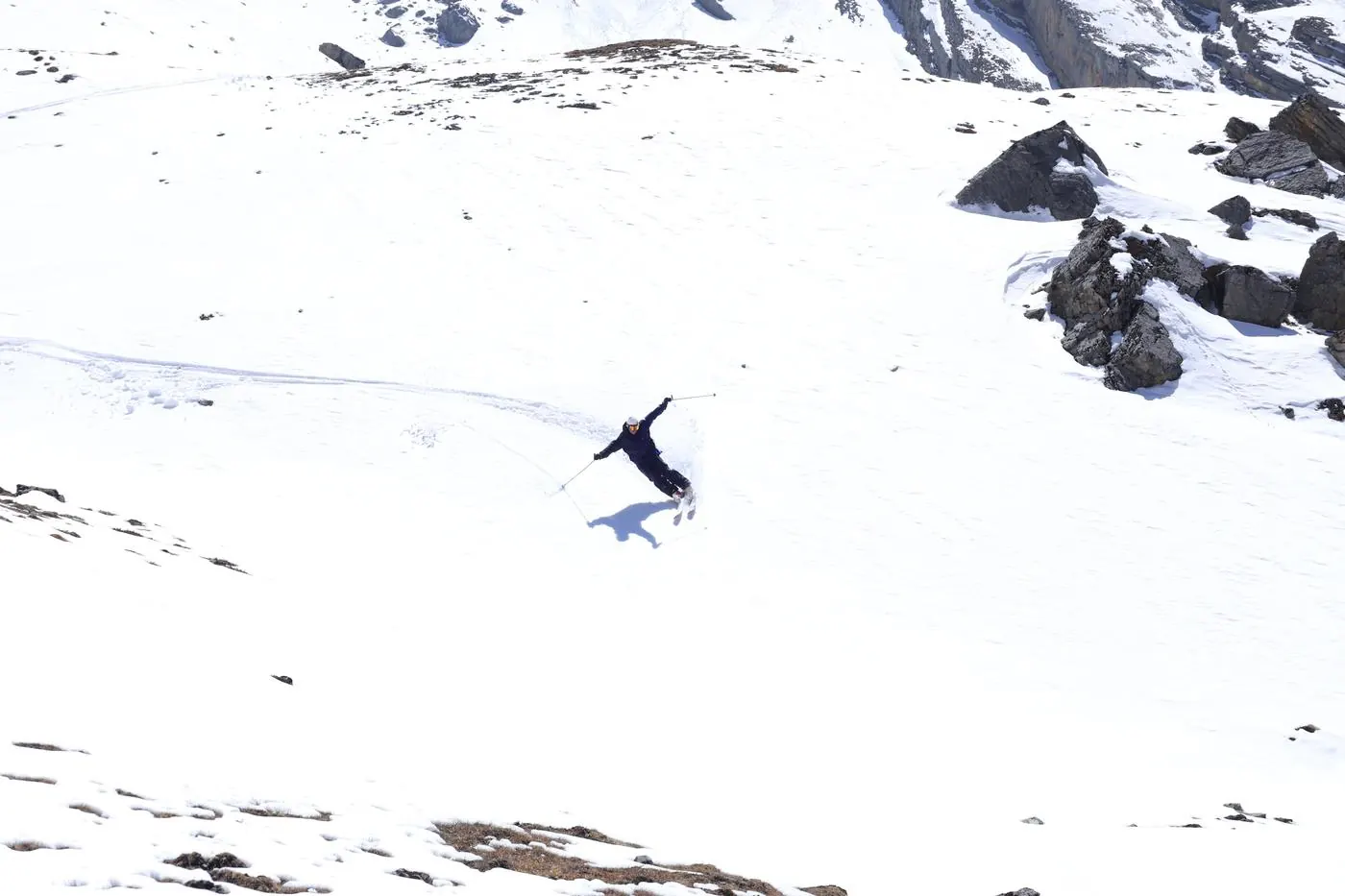
Skiers are used to driving to a resort at 2,000m and skiing the same day. Nepal isn’t like that. Most skiing here is above 4,000m, and the big peaks are above 6,000m. Your body needs days to adapt, and the skiing can only start once it has.
Touring also makes it harder. Climbing uphill on skins is hard work, and overexertion is one of the risk factors for altitude illness.
The rules of thumb
- Sleeping altitude matters most. Where you sleep counts for more than how high you go in the day.
- 500m a day. Above 3,000m, raise your sleeping altitude by no more than 500m a day.
- Rest days. Take one every three or four days, or for every 1,000m gained.
- Climb high, sleep low. Skiing helps: you can climb high in the day and ski back down to sleep.
Warning signs
Acute mountain sickness (AMS): headache plus nausea, tiredness, dizziness or poor sleep. Don’t go higher until it clears.
HAPE (fluid on the lungs): increasing breathlessness, even at rest, and a cough. HACE (swelling of the brain): confusion and loss of coordination. Both are emergencies. The answer is to go down.
Assume symptoms at altitude are altitude illness until proven otherwise, and never leave someone with symptoms alone.
Medication
Some people take acetazolamide to help prevent altitude sickness. Whether it’s right for you is a question for a doctor or travel clinic before you travel, not for us.
How we plan for it
Our itineraries follow these rules, with acclimatisation days, spare days for weather and ski days placed where your body is ready for them. Our 7,000m expeditions keep emergency oxygen and a full medical kit at base camp, and insurance covering helicopter rescue is a condition of booking.
Questions
At what altitude does altitude sickness start?
It can start above about 2,500m, and gets more likely the higher and faster you go.
Does being fit stop altitude sickness?
No. Fitness helps you enjoy the trip, but it doesn’t protect you. Ascent rate does.
Is skiing at altitude harder?
Yes. There’s less oxygen, so climbing is slower and you tire faster. Skiing down is the easy part.
What should I do if I feel ill at altitude?
Tell your guide straight away, don’t go higher, and go down if it gets worse.